The New Control Layers

A four-part Gridizer Research dossier about AI, the internet, mobility and memory as the new control layers of the emerging power economy.

A four-part Gridizer Research dossier about AI, the internet, mobility and memory as the new control layers of the emerging power economy.

The internet is not disappearing, but it is changing. The world is moving from one global network toward several partially connected digital ecosystems.

Artificial intelligence is no longer just a software story. Energy, chips, capital, regulation and geopolitical access increasingly determine who can build, scale and control the next generation of AI systems.

Why civilization, freedom and artificial intelligence depend on the ability to preserve, verify and interpret memory.

The Missing Exit Strategy, Germany’s Cost Burden and the EU’s Consent Problem Europe’s Ukraine policy is increasingly presented as a moral necessity, a defense strategy and a historic enlargement project at the same time. That fusion is politically powerful, but analytically dangerous. Ukraine support, European rearmament, EU fiscal expansion, sanctions, energy restructuring and possible accession … Read more

Why Global Companies Must Price Spheres of Influence Again The post-Cold War assumption was that globalization would gradually reduce the economic importance of spheres of influence. Capital, goods, energy, data and technology were expected to move through rules-based systems. Political risk existed, but it was often treated as an exception. That assumption is breaking. The … Read more

The New Geography of Energy Security The Strait of Hormuz is often discussed as an oil chokepoint. That is correct, but incomplete. The current crisis shows that the oil price alone is no longer a reliable gauge of real energy stress. Transit flows, insurance costs, tanker availability, LNG exposure, refinery compatibility, oil product markets and … Read more
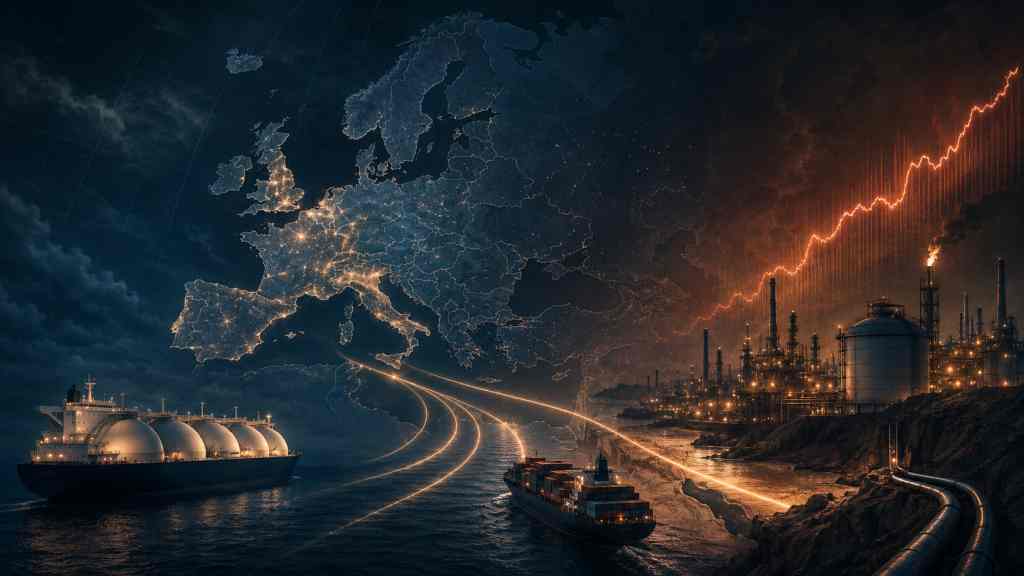
Europe may benefit from the ceasefire headline, but its deeper vulnerability to imported energy, shipping friction, and slower industrial normalization points to a more persistent stagflation risk. Europe’s relief may be more fragile than America’s. The ceasefire has reduced the immediate panic in energy markets, but Europe remains structurally more exposed than the United States. … Read more
The feared U.S. Treasury auction blow-up has not happened, but recent auctions suggest a bond market that is becoming more selective, less forgiving, and more exposed to inflation, deficits, and geopolitical stress. The feared auction accident has not happened. The latest U.S. Treasury auctions have not produced the kind of outright funding shock some observers … Read more
The ceasefire reduced the probability of a near-term energy panic. That explains why oil fell and risk assets rallied.